

Beyond the Therapy Room: The Benefits of Home & Community-Based ABA

When many people think about ABA therapy, they picture a child sitting in a therapy room with a therapist.
While center-based therapy is an incredible option for many families, it's only one piece of the puzzle.
Some of the most meaningful learning happens exactly where your child spends their everyday life—at home, at the playground, in the grocery store, at preschool, at summer camp, or even during karate class.
At Thrive Pediatric Behavioral Health, we believe that the best place to teach a skill is often the place where your child will actually use it.
That's why we proudly offer home and community-based ABA services designed to help children succeed in the environments that matter most.
Real Life Is the Best Classroom
Think about all of the skills your child uses every single day.
Getting dressed.
Brushing their teeth.
Eating meals with the family.
Playing with siblings.
Following directions.
Cleaning up toys.
Crossing the street safely.
Waiting in line.
Shopping at the grocery store.
Playing with friends at the park.
These aren't skills that only happen during therapy—they're part of everyday life.
When therapy takes place in your child's natural environment, we can teach these skills during real situations, making them more meaningful and easier to carry over into daily routines.
Home Is Where Families Spend the Most Time
Your home is unique.
Your routines are unique.
Your family's goals are unique.
That's why home-based ABA isn't about walking into your house with a one-size-fits-all program.
It's about understanding your family's routines and helping make everyday life a little easier.
Depending on your child's goals, therapy may focus on:
Morning routines before school
Getting dressed independently
Toilet training
Brushing teeth and personal hygiene
Playing appropriately with siblings
Increasing communication during meals
Following household routines
Cleaning up toys
Reducing challenging behaviors during transitions
Building independent play skills
Developing functional communication using speech or an AAC device
Instead of practicing these skills somewhere else and hoping they transfer home, we teach them where they'll naturally occur.
Community-Based ABA Builds Real-World Confidence
Learning a skill in therapy is important.
Using that skill in the real world is even more meaningful.
That's why many of our clients receive therapy in community settings.
Depending on your child's individualized treatment plan, our therapists may support them at:
Parks and playgrounds
Libraries
Summer camps
Preschool
Daycare
After-school programs
Karate or recreational activities
Community events
Neighborhood walks
These experiences allow children to practice communication, social skills, flexibility, waiting, safety awareness, and independence in natural environments with real people.
For many children, that's where confidence truly begins to grow.
Parent Training Is One of the Most Valuable Parts of ABA
One of the things that makes ABA unique is that it doesn't stop with the child.
Parents are an essential part of the therapy team.
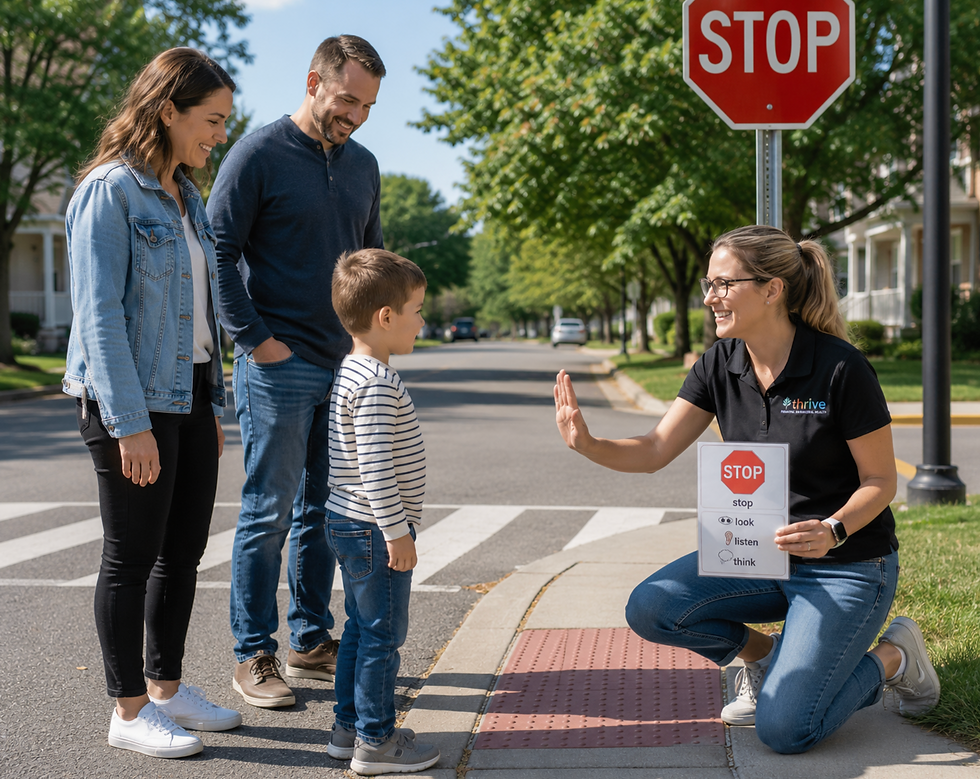
Our BCBAs and Licensed Behavior Specialists work directly with families to teach strategies that fit naturally into everyday life.
Sometimes that means sitting together at your kitchen table reviewing behavior strategies.
Other times, it means meeting you at the grocery store because that's where meltdowns tend to happen.
We may help you practice:
Shopping trips
Restaurant outings
Doctor's appointments
Family gatherings
Playground visits
Community safety skills
Transitioning away from preferred activities
Using visual schedules at home
Supporting communication with an AAC device
Teaching independence during daily routines
Because if something is difficult for your family in real life, that's exactly where we want to help.
Therapy That Looks Like Everyday Life
One of the things parents tell us most often is,
"I didn't realize therapy could look like this."
During a home or community session, you might see an RBT:
Playing a board game while teaching turn-taking.
Helping a child request a snack using their AAC device.
Practicing riding a scooter while working on following directions.
Teaching a child to ask another child to play at the park.
Helping a child tolerate waiting in line for ice cream.
Practicing stopping at a stop sign before crossing the street.
Supporting a child during circle time at preschool.
Encouraging a child to participate in arts and crafts at summer camp.
To someone walking by, it might simply look like a child enjoying their day.
What they don't see is all of the communication, social skills, flexibility, emotional regulation, and independence being taught in those moments.
The Goal Is Independence
Everything we do comes back to one simple question:
"Will this skill make life better for this child and their family?"
If the answer is yes, then it's worth teaching.
Success isn't measured by how many programs a child completes.
Success is measured by moments like:
Walking safely through a parking lot.
Asking for help instead of crying.
Playing with a sibling for ten minutes.
Joining classmates during recess.
Going to a birthday party with confidence.
Ordering their own meal at a restaurant.
Enjoying a family outing that once felt impossible.
Those are the moments families remember.
Those are the moments that change everyday life.
Wherever Life Happens, That's Where Learning Happens
Sometimes that's in your living room while building with blocks.
Sometimes it's at preschool learning to raise a hand during circle time.
Sometimes it's practicing social skills at summer camp.
Sometimes it's learning how to cross the street safely with Mom and Dad.
There isn't one perfect place for therapy.
There are countless opportunities to learn throughout the day, and our job is to recognize those moments and turn them into meaningful teaching opportunities.
At Thrive Pediatric Behavioral Health, we believe therapy should never exist in a bubble.
It should prepare children for real life.
Because when children can communicate, play, learn, and participate confidently at home, at school, and in their community, they're not just making progress in therapy.
They're building the skills they'll carry with them for the rest of their lives.


Comments